
 Antibiotic Resistance




Antibiotic resistance is a worrying phenomenon, because antibiotics are essential to fight against – or to prevent – many infections induced by bacteria. Antibiotics are a mainstay of modern medicine:
 Close
Close

Antibiotic resistance makes bacterial infections longer – and sometimes impossible – to treat. It can be the cause for deaths, prolonged hospital stays, and increased costs for the health system. Globally, more and more bacteria are becoming resistant to the action of certain antibiotics. In Switzerland ANRESIS supervises the current situation and regularly publishes the latest trends.
Close

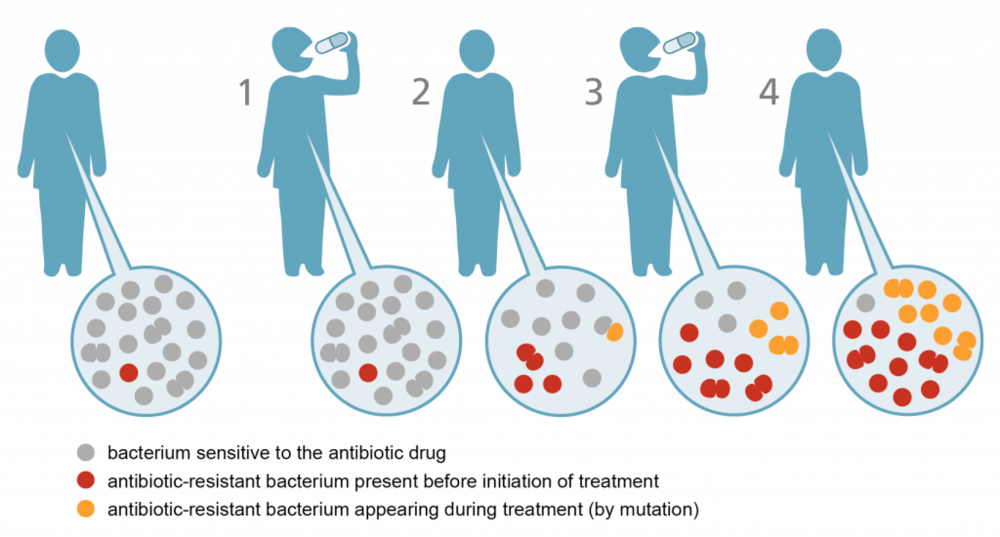
Each time that antibiotics are used, the subset of bacteria able to endure their onslaught not only survive but can make the most of the elimination of susceptible bacteria around them to thrive. This process is known as “selection”.
 Close
Close

People returning from abroad can import antibiotic-resistant bacteria – especially if they were hospitalised during their stay. If they are admitted to a hospital or private clinic within 12 months of their return, they should inform the medical personnel of their hospitalisation in a foreign country. The early detection of resistant bacteria helps limit their spread and makes medical treatments easier.
Close

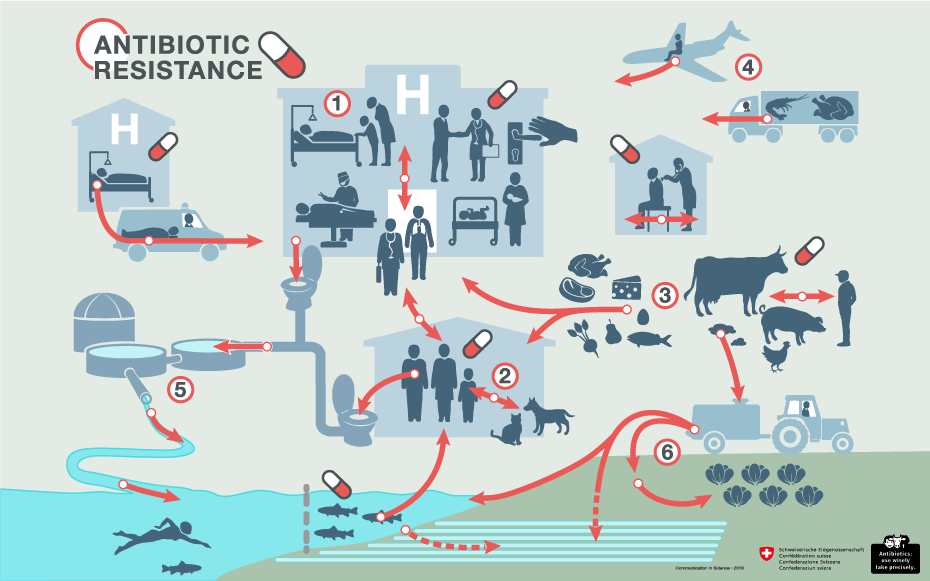
As antibiotic resistance doesn’t only concern human medicine, but also veterinary medicine, agriculture, and the environment, the Swiss Federal Council adopted the overarching Strategy on Antibiotic Resistance (StAR). This strategy outlines measures in eight strategic fields of activity: monitoring, prevention, appropriate use of antibiotics, resistance control, research and development, cooperation, information and education, and general conditions.
Close

Antibiotics are pharmaceutical drugs (requiring a prescription) which are used for the treatment of bacterial infections. Whether an infection has to be treated or not is decided by the treating physician together with the patient by considering symptoms and laboratory results. Not all bacterial infections need an antibiotic treatment. Some urinary tract or ear infections are readily cleared by the body’s immune system, without the help of antibiotics. In case you have been prescribed antibiotics, adhere to the prescribed dose and duration and don’t skip an intake. Don’t share your antibiotics with other persons and return partially used packs.
Close

Antibiotics are pharmaceutical drugs (requiring a prescription) that kill bacteria or prevent them from reproducing. They have no effect against viral diseases (e.g. colds, flu, most forms of gastroenteritis), fungal conditions or parasitic infections (such as malaria).
Antibiotics have no effect against flu or the common cold, which are caused by viruses. Taking antibiotics in such situations is not only useless but also potentially dangerous due to side effects, and because it increases the risk of developing resistant bacteria which may then be transmitted to others.
An antibiotic is a weapon that becomes weaker every time that it is used. This is why it is so important to avoid taking them when not necessary. Each time that an antibiotic is used, a small number of resistant bacteria survive, and these then prosper and multiply because they are the only ones able to do so.
Antibiotics can have side effects. The most common are digestive problems, diarrhoea, nausea, skin rash or kidney dysfunction. The presence and intensity of these effects varies considerably from one person to another. They also depend on the type of antibiotic used and on any other drugs or substances – including alcohol – that the person may be taking.
People do not become resistant to antibiotics, only bacteria can. Then the resistant bacteria can multiply, move from one person to another and make treatment more difficult, longer and even impossible in some cases.
Antibiotic resistance is a natural phenomenon which has been around for millions of years. Indeed, bacteria and fungi produce antibiotics naturally, to protect themselves or to fight against each other. The first antibiotics used in medicine, including penicillin, were extracted from fungi. By using large quantities of such substances in human and animal health care since the mid-1940s, we have greatly amplified a natural process: each time that an antibiotic is used, resistant bacteria multiply and prosper because they are the only ones able to do so under those particular circumstances.
Antibiotics are necessary to prevent or treat infections linked to surgery or to treat complications which lead to the hospitalisation of the patient.
Antibiotics are frequently used to prevent infections in cancer patients following chemotherapy. They can also help treat complications of common conditions, such as foot ulcers caused by diabetes.
The number of skin infections and other infections caused by methicillin-resistant Staphylococcus aureus (MRSA) has decreased by two thirds since 2004, thanks to improved detection and rapid treatment of infected patients in hospitals.
In Switzerland, the Federal Veterinary Medicinal Products Ordinance has prohibited the use of antibiotics to promote growth in animal husbandry since 1999. A similar ban entered into force in the European Union in 2006.
Close
Source: Strategy on Antibiotic Resistance (StAR), Swiss Federal Office of Public Health, FOPH
Pictures: Communication in Science/ FOPH.